INSTITUTIONS AND INITIATIVES
A Network of Institutions for Integrated Development


NFD advances its mission through a network of specialised institutions working across science education, rural development, public health, environmental education, crafts and heritage, and urban sustainability.
This institutional architecture reflects Dr. Vikram Sarabhai’s original vision: build enduring institutions that address complex development challenges through knowledge, participation, and long-term engagement.
Each institution operates in a distinct thematic domain. Together, they form an interconnected ecosystem that enables NFD to respond to India’s evolving development priorities in a holistic and integrated manner.
Our Institutions

Vikram A Sarabhai Community Science Centre (VASCSC)
Founded in 1966 as NFD’s first initiative, VASCSC works to popularise science and strengthen STEM education. It promotes scientific temper, curiosity and inquiry through hands-on learning, teacher training, laboratories, exhibitions, outreach programmes and innovative teaching-learning materials.
VASCSC serves students, teachers and the wider community, fostering scientific thinking as a foundation for responsible citizenship.

VIKSAT
Established in 1977, VIKSAT focuses on sustainable rural development and natural resource management. It works to strengthen people’s institutions and promote climate-resilient livelihoods through participatory and inclusive approaches.
Its work spans sustainable livelihoods, land and water management, climate-smart agriculture, WASH, renewable energy, and institutional capacity building.

CHETNA
Founded in 1984, CHETNA is a women-led public health organisation committed to advancing the health, nutrition and rights of women, children and adolescents, particularly from marginalised communities.
Through capacity building, communication, model development and policy engagement, CHETNA works to ensure equitable access to health and nutrition services.

Centre for Environment Education (CEE)
Established by NFD as a Centre of Excellence under the Ministry of Environment, Forest and Climate Change, Government of India, CEE promotes environmental education and education for sustainable development at national and international levels.
It develops innovative educational materials, builds institutional capacities, and undertakes demonstration projects that link education to sustainable action.

KHAMIR
Formally registered in 2005, KHAMIR works to strengthen and promote the rich artisanal traditions of Kachchh. It supports artisans through design development, skill enhancement, demonstration facilities and livelihood support.
KHAMIR integrates cultural preservation with sustainable livelihoods, helping build a vibrant and resilient craft sector.

Society for Sustainable Urban Development (SSUD)
Registered in 2005, SSUD works on issues of urban sustainability, public awareness, participatory governance and appropriate technologies.
It currently anchors the implementation of the Blue Flag programme in India and contributes to sustainable mobility and coastal stewardship initiatives.
NFD functions as an institutional anchor, providing continuity of vision, ethical grounding and strategic alignment across the ecosystem. Each institution operates with programmatic autonomy while adhering to common standards of governance, transparency, accountability and institutional discipline.
All institutions within the NFD ecosystem follow broad shared guidelines relating to -Inclusive and participatory development; Non-political and non-partisan institutional stance; Scientific temper and evidence-based practice; Ethical fundraising and financial prudence; Institution building rather than short-term project delivery; Respect for diversity, equity and community leadership.
This model combines autonomy with coherence. It allows domain-specific excellence while maintaining a shared commitment to people-centred, sustainable development.
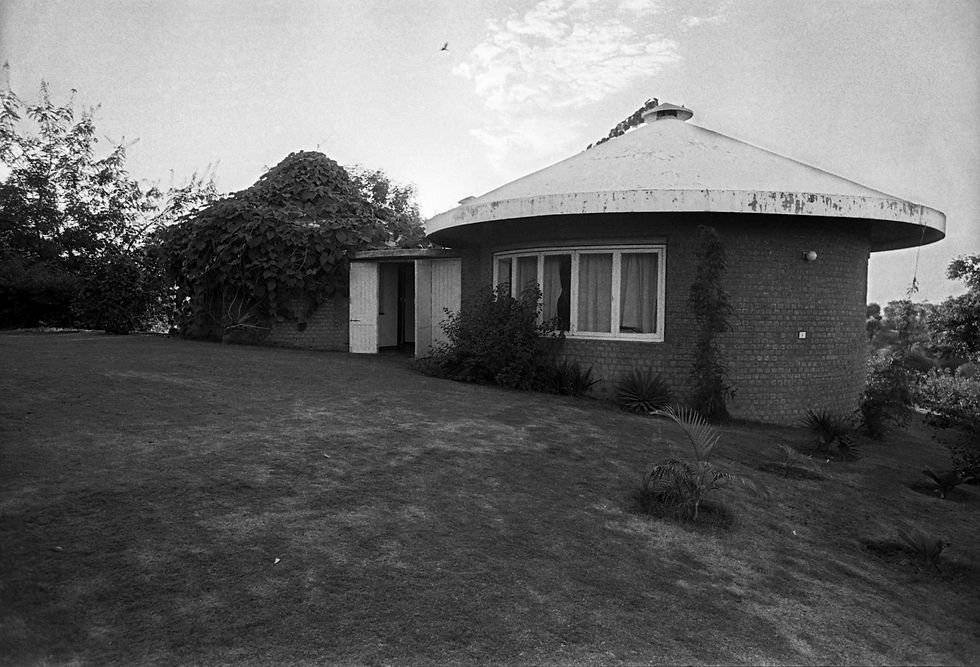
The NFD Ecosystem
While these institutions operate in diverse thematic areas and maintain their own governance structures, they are united by a shared philosophical foundation.
A Multi-Sector Platform for Sustainable Development
Taken together, the institutions of NFD form a multi-sector development platform capable of addressing interconnected challenges.
Education connects with environment. Livelihoods intersect with natural resource management. Health links with gender equity. Urban sustainability interacts with ecological stewardship. Craft traditions contribute to livelihoods, cultural continuity and resilient local economies.
By nurturing specialised institutions within a shared ecosystem, NFD has built long-term institutional depth and flexibility. This enables it to respond thoughtfully to emerging development challenges while remaining grounded in its founding vision.
